
Electric Bikes Are Booming in Brazil. But Which Ones Need a Licence?
Electric bikes are becoming a normal part of life in Brazil. People use them to go to work, make deliveries, exercise and travel short distances without depending on a car or motorcycle.
The change has happened quickly. Sector estimates show that the number of electric bikes in circulation grew about 37 times in eight years, from around 7,600 in 2016 to 284,000 in 2024.
More recent information also suggests that interest is continuing. A national bicycle retail survey published in April 2026 found that 54% of the bike shops surveyed sold electric bicycles in 2025, compared with 47% the year before.
For many people, these vehicles are an attractive form of . They can make longer journeys easier, help riders go uphill and offer an alternative for short trips. But there is also some confusion because vehicles that look very similar may follow very different traffic rules.
Under Brazilian rules, an electric bicycle is pedal-assisted. This means the motor helps only when the cyclist is pedalling. It cannot have an , its motor can have up to 1,000 watts of power, and the electric assistance is limited to 32 km/h. These bicycles do not need a licence plate, or a driver's licence.
A self-propelled vehicle is different. It can move using an , without the rider having to pedal. Vehicles in this category can have up to 1,000 watts of power, a maximum manufacturing speed of 32 km/h, a maximum width of 70 centimetres and a wheelbase of up to 130 centimetres. When they stay within the official limits, they do not require a driver's licence or either.
Then there are mopeds. Under the federal rules, an electric can have a motor of up to 4 kW and a maximum manufacturing speed of 50 km/h. And 2026 brought an important change for many owners.
Since January 1, 2026, mopeds used on public roads must be registered, licensed and have a licence plate. Riders must also have an ACC permit or a category A driver's licence and must wear a motorcycle helmet. Vehicles that are not properly registered can be fined and removed from the road.
The differences may sound technical, but they matter for safety. A vehicle travelling at 50 km/h behaves very differently from a normal bicycle, even if the two look similar.
As more electric vehicles appear on Brazilian streets, another question is becoming more important: is the existing ready for them?
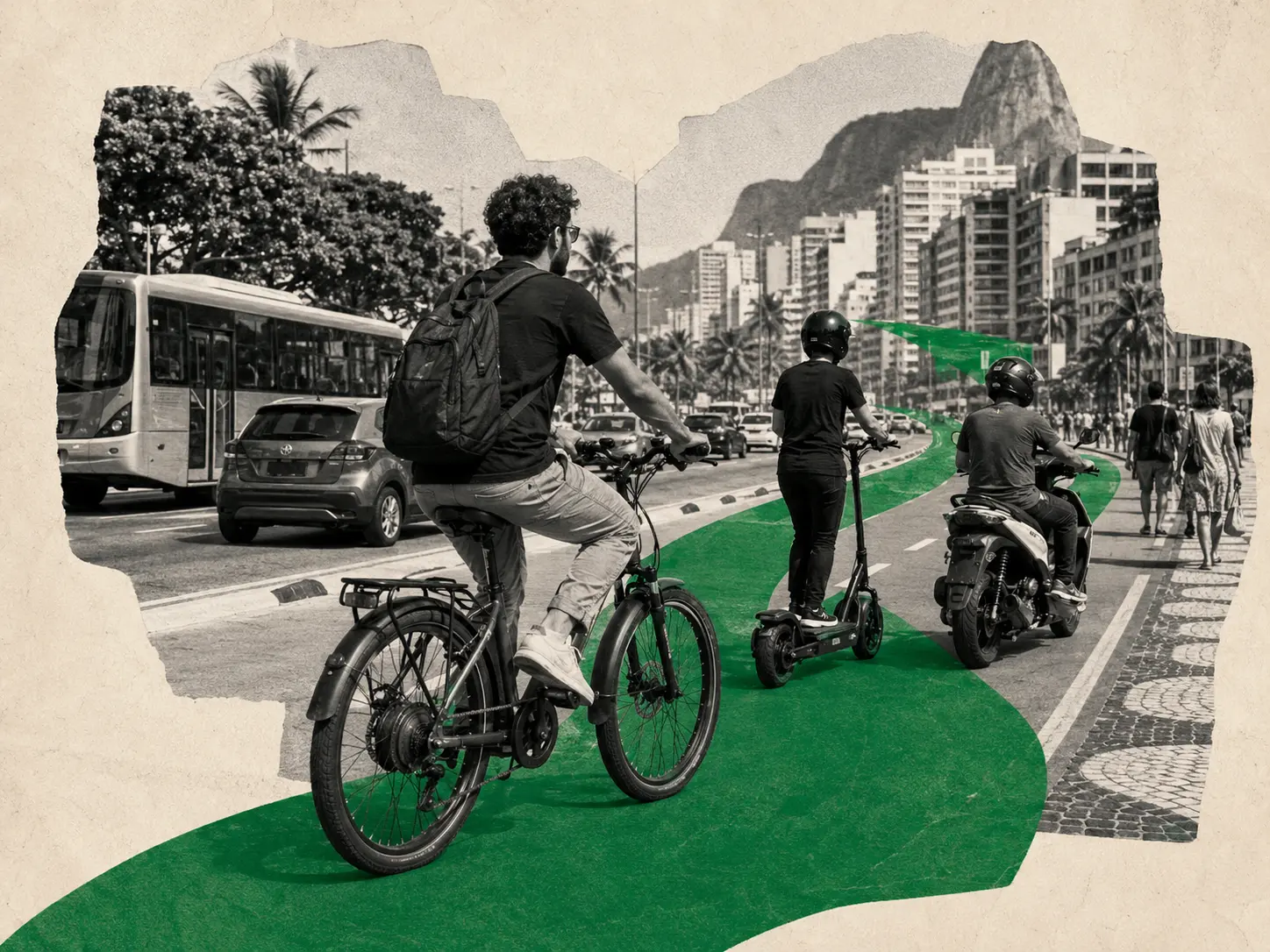
Electric bicycles and self-propelled vehicles may be allowed in cycling spaces according to national and local rules. Traffic authorities can create specific rules for where these smaller electric vehicles are allowed to travel. Mopeds are motor vehicles and are subject to a different set of road rules.
Electric is clearly becoming more popular in Brazil. The challenge now is making sure that riders understand what type of vehicle they are using and that streets can safely accommodate pedestrians, bicycles, electric vehicles, motorcycles, cars and buses.
Reading Comprehension Quiz
5 questions about the article you just read
What does the 2026 retail survey suggest about electric bikes in Brazil?
What makes an electric bicycle different from a self-propelled vehicle?
What changed for mopeds in 2026?
In the article, what does “infrastructure” mean?
What is one main issue created by the rapid growth of electric mobility?